Showing posts with label trademark. Show all posts

Saturday, 30 July 2016

The Market Court: FINKA (Figure) Is Confusable with FINKA for Vodka

The Market Court issued a trademark decision 432/16 on 8 July 2016. The court ruled that the applied national trademark FINKA (figure) is confusable with the earlier European Union trademark FINKA. Both marks are registered in class 33.

Background

Sai­maa Be­ve­ra­ges Oy Ltd (Saimaa) applied to register a figure mark FINKA in class 33 for vodka on 20 August 2014.

Application no. T201451621.

The Patent and Registration Office (PRH) denied the registration (decision 8 April 2015) because the mark is liable to be confused with an earlier European Union trademark (EUTM) registration FINKA (no. 004750634), registered on 13 October 2006. The EUTM FINKA is registered in class 33 for al­co­ho­lic be­ve­ra­ges, in par­ti­cu­lar vod­ka.

Saimaa filed an appeal to the Market Court against the PRH's decision.

The Market Court issued its decision 432/16 on 8 July 2016.

The Market Court

According to section 14 paragraph 1 sub-paragraph 9 of the Finnish Trademarks Act (7/1964), a trademark shall not be registered if it is liable to be confused with a European Union trademark within the meaning of section 57 that has been registered on the basis of an earlier application.

According to section 6 paragraph 1 of the Act, trade symbols shall be regarded under this Act as liable to cause confusion only if they apply to goods of identical or similar type.

The court referred to the established case-law and stated the following: 

There is a likelihood of confusion where the public can be mistaken as to the origin of the goods or services in question.

Accordingly, the risk that the public might believe that the goods or services in question come from the same undertaking or, as the case may be, from economically-linked undertakings, constitutes a likelihood of confusion.

The likelihood of confusion must be appreciated globally, taking into account all factors relevant to the circumstances of the case.

In assessing the similarity of the goods or services concerned, all the relevant factors relating to those goods or services themselves should be taken into account. Those factors include, inter alia, their nature, their intended purpose and their method of use and whether they are in competition with each other or are complementary. The comparison of the goods or services should also focus on their distribution channels and their usual origin.

The global appreciation of the visual, aural or conceptual similarity of the marks in question, must be based on the overall impression given by the marks, bearing in mind, in particular, their distinctive and dominant components.

The more similar the goods or services covered and the more distinctive the earlier mark, the greater will be the likelihood of confusion.

The applied mark FINKA (figure) covers the following goods in the class 33: vodka. The earlier EUTM FINKA is registered in class 33 for al­co­ho­lic be­ve­ra­ges, in par­ti­cu­lar vod­ka.

These goods are consequently considered identical.

The court stated that the average Finnish consumer of the category of goods concerned is deemed to be reasonably observant.

The applied mark FINKA is a figure mark and it is written in capital letters. The mark has a rather usual font. The letter A is stylized. 

The earlier EUTM FINKA is a word mark that consists of a word "FINKA". Neither of the parties argued that the word "FINKA" would have any generally known meanings regarding the goods in question. Therefore, the EUTM FINKA has a normal distinctiveness for the goods.

The conflicting marks have a very high degree of visual similarity, despite the stylized letter A in the applied mark. Furthermore, the marks are aurally identical. The conceptual similarity cannot be compared since the word "FINKA" does not have a clear meaning among the relevant public.

The court stated that the conflicting marks have identical goods. Furthermore, the marks have a very high degree of similarity. The court concluded that the applied mark FINKA (figure) is confusable with the mark FINKA.  

The action was dismissed.

Monday, 25 July 2016

The Market Court: Domain Name Dispute and the Appellant's Allegedly Established Trademarks

The Market Court issued a domain name decision 418/16 on 1 July 2016. According to the court, the appellant, who was opposing a domain name registration, could not prove that its trademarks were evidently established at the time of the domain name application. In result, the revocation and transfer request was dismissed.

Background

The Finnish communications regulatory authority (FICORA) granted a domain name ppi­net.fi to a person X on 9 November 2013.

Te­lia­So­ne­ra Fin­land Oyj (TeliaSonera) requested FICORA to cancel the domain name and to transfer it to TeliaSonera. TeliaSonera argued that the domain name is a derivative of its established trademarks iNET KES­KUS­KA­TU, INET and PP.INET.FI.

FICORA dismissed the request on 18 December 2014. According to FICORA, the establishment of the marks is not evident. 

TeliaSonera filed an appeal to the Market Court against the FICORA's decision.

The Market Court issued its decision 418/16 on 1 July 2016.

The Market Court

According to section 4 paragraph 3 of Domain Name Act 228/2003 (amendments up to 397/2009 included), a domain name shall not be illegally based on a protected name or trademark owned by another party or on a natural person’s name.

According to section 3 sub-paragraph 3 of the Act, protected name or trademark means a name or trademark that has been entered into the trade register or into the registers of trademarks, associations, foundations, or political parties; or an established name, a secondary mark or trademark referred to in the Business Names Act (128/1979) or Trademarks Act (7/1964); or a name of a public body, unincorporated state enterprise, independent public corporation, public association, or diplomatic mission of a foreign state or their bodies.

According to section 12 paragraph 1 sub-paragraph 4 of the Act, FICORA may revoke a domain name, if there are weighty reasons to suspect that the domain name is a derivative of a protected name or trademark or a derivative of a natural person’s name that has been obtained with the obvious intent of obtaining benefit or harming another, and the holder of the name or trademark requests that the name be revoked and the domain name holder has not presented an acceptable reason for its right within a period of two weeks.

According to section 12 paragraph 2 of the Act, FICORA may transfer a domain name that has been revoked by virtue of paragraph 1 (2–4) to a party that has requested the revocation.

The court referred to Supreme Administrative Court (SAC) ruling 2006:41, where SAC stated that the competence of FICORA is, regarding the section 12 paragraph 1 sub-paragraph 4 of the Act, only limited to situations where it is evident that the domain name is an unlawful derivative of a protected trademark.

The court also referred to legal literature where it is stated that the establishment of the mark has to be evident. This requirement is justifiable because of the simplified procedure used in the assessment of the domain name applications.

The court had to assess whether the appellant's marks were evidently established at the time of the domain name application on 9 November 2013. If that was the case, the marks are then considered as protected trademarks and eligible for the protection provided in the section 12 paragraph 1 sub-paragraph 4.

TeliaSonera argued that the mark iNET KES­KUS­KA­TU was introduced in 1994 and it was used for a long time on a website inet.fi. According to TeliaSonera, this website was one of the most popular and used websites in Finland in the late 1990's.

TeliaSonera argued also that the mark INET has been used actively for internet services since 1995. INET was the most popular home internet plan in Finland. TeliaSonera has also had some other services with the mark INET, such as INET voice chat and INET live.

TeliaSonera argued also that the mark PP.INET.FI has been widely used for email services since 1995 and there are still many active users of the email addresses @pp.inet.fi.

The court stated that the marks of the appellant were introduced in the 1990's and they have been widely used back then. However, the assessment here required evidence of the alleged establishment at the time of the domain name application on 9 November 2013. The court stated that the provided evidence is not able to prove that the appellant's marks were evidently established at the time of the domain name application. Therefore, the marks were not protected and there was no need to assess whether the domain name has been obtained with the obvious intent of obtaining benefit or harming the appellant.

The action was dismissed.

The court ordered the appellant to pay the defendant's legal fees, in total 3 441 euros.

Friday, 15 July 2016

The Finnish Trademarks Act Will Be Revised

Ministry of Economic Affairs and Employment has appointed a working group to revise the current Trademarks Act (7/1964). The Ministry gave its decision on 22 June 2016.

This will be an overall reform that takes care of the implementation of the revised EU Trademark Directive 2015/2436 and the Singapore Treaty on the Law of Trademarks. This revision will also bring some changes to the Trade Names Act (128/1979).

The term of operation for the working group is between 15 August 2016 and 15 December 2017. The group will prepare a Government Proposal and the Proposal will be handed to the Parliament in Autumn 2018.

Tuesday, 12 July 2016

The Market Court: EUTM HANGOVER is Descriptive for Pizzas

The Market Court declared invalid the registered European Union trademark HANGOVER pursuant to Article 7(1)(b-c) of the Community trademark Regulation No 207/2009 in its decision 375/16 on 17 June 2016. According to the court, the trademark is descriptive for the goods in question (class 30 for Pizzas) and therefore also devoid of any distinctive character.

After this the proprietor tried to argue that the trademark has become established, but the court did not find any evidence to support the claim and also dismissed the infringement claim (decision 376/15 on 17 June 2016).

Background

CPR Con­sep­tor Oy (CPR) is the holder of a registered European Union trademark (EUTM) no. 012274734 HAN­GO­VER (word), registered on 18 March 2014. The EUTM is registered in class 30 for Pizzas.

CPR has been using the word "HAN­GO­VER" as a pizza name since 1996. According to the company, it has 12 franchised restaurants all over Finland. Between 2005 and 2014 it has sold approximately 200 000 "HANGOVER" pizzas. According to CPR's website, the pizza contains spicy salsa sauce, mozzarella, salami, crispy bacon, pickled cucumber and jalapeños.

CPR was not happy that some of its competitors were using names "Hangover" and "Hangover Express" for their pizzas. In 2015, CPR launched trademark infringement proceedings against the competitors.

The competitors filed a counterclaim, asserting that the plaintiff’s trademark registration shall be declared invalid pursuant to Article 7(1)(b-d) and Article 52(1)(b) or it shall be declared to be revoked pursuant to Article 51(1)(b) of the Community trademark Regulation No 207/2009.


There is nothing a good pizza can't cure!
Image courtesy of jarmoluk at Pixabay.com


The Market Court

First, the court assessed the invalidity claim (decision 375/16, issued on 17 June 2016).

According to Article 51(1)(a) of the Regulation:

1. A Community trade mark shall be declared invalid on application to the Office or on the basis of a counterclaim in infringement proceedings:  
a) where the Community trade mark has been registered contrary to the provisions of Article 7.

The competitors argued that the EUTM has been registered contrary to Article 7(1)(b-d). According to Article 7(1)(b-d) of the Regulation:

1. The following shall not be registered:  
(b) trade marks which are devoid of any distinctive character;
(c) trade marks which consist exclusively of signs or indications which may serve, in trade, to designate the kind, quality, quantity, intended purpose, value, geographical origin or the time of production of the goods or of rendering of the service, or other characteristics of the goods or service;
(d) trade marks which consist exclusively of signs or indications which have become customary in the current language or in the bona fide and established practices of the trade.

According to Article 7(2) of the Regulation, paragraph 1 shall apply notwithstanding that the grounds of non-registrability obtain in only part of the Community.

The court referred to the case-law of the Court of Justice (CJ) and the General Court (GC):

The Article 7(1)(c) prevents the signs or indications referred to therein from being reserved to one undertaking alone because they have been registered as trade marks. That provision thus pursues an aim in the public interest, which requires that such signs or indications may be freely used by all. [See Joined Cases C-108/97, C-109/97 Wind­sur­fing Chiem­see, para 25 and T-348/02 Quick, para 27.]

Furthermore the signs referred to by Article 7(1)(c) are signs regarded as incapable of performing the essential function of a trade mark, namely that of identifying the commercial origin of the goods or services, thus enabling the consumer who acquired the product or service to repeat the experience, if it proves to be positive, or to avoid it, if it proves to be negative, on the occasion of a subsequent acquisition.[See T-219/00 Ellos, para 28.]

The signs and indications referred to in Article 7(1)(c) are those which may serve in normal usage from the point of view of the target public to designate, either directly or by reference to one of their essential characteristics, the goods or service in respect of which registration is sought. [See T-19/04 Metso Paper Automation, para 24 and C-383/99 P Procter & Gamble, para 39.]

It follows that, for a sign to be caught by the prohibition set out in that provision, there must be a sufficiently direct and specific relationship between the sign and the goods and services in question to enable the public concerned immediately to perceive, without further thought, a description of the goods and services in question or one of their characteristics. [See T-19/04 Metso Paper Automation, para 25.]

In order for OHIM to refuse to register a trade mark under Article 7(1)(c), it is not necessary that the signs and indications composing the mark that are referred to in that article actually be in use at the time of the application for registration in a way that is descriptive of goods or services such as those in relation to which the application is filed, or of characteristics of those goods or services. It is sufficient, as the wording of that provision itself indicates, that such signs and indications could be used for such purposes. A sign must therefore be refused registration under that provision if at least one of its possible meanings designates a characteristic of the goods or services concerned. [See C-191/01 P Wrigley, para 32.]

The distinctiveness of a trade mark must be assessed, first, in relation to the goods or services in respect of which registration of the sign has been requested and, second, in relation to the perception of the section of the public targeted, which is composed of the consumers of those products or services. [See T-348/02 Quick, para 29.]

In that regard, although it is clear from Article 7(1)(c) of Regulation that each of the grounds for refusal listed in that provision is independent of the others and calls for separate examination, there is a clear overlap between the scope of the grounds for refusal set out in subparagraphs (b), (c) and (d) of Article 7(1). In particular, a word mark which is descriptive of characteristics of goods or services for the purposes of Article 7(1)(c) is, on that account, necessarily devoid of any distinctive character with regard to the same goods or services within the meaning of Article 7(1)(c). [See C-265/00 Campina Melkunie, paras 18-19, C-363/99 Koninklijke KPN Nederland, paras 67 and 86 and T-322/03 Telefon & Buch, para 111,]

The court stated that the word "hangover" ("krapula" in Finnish) refers to the condition following an abundant use of alcoholic beverages. Neither of the parties argued that the word would have some other generally known meanings.

The court considered that the relevant public, average consumers, consists of English speaking audience who understands the meaning of the word. The court stated that the Finnish consumers are part of that audience.

The competitors claimed that, inter alia, the EUTM HANGOVER designates the kind or at least one of the intended purposes of the goods [Article 7(1)(c)]. According to the companies, the relevant public understands pizza as a typical hangover food and hangover remedy.

The competitors provided also evidence of Google search results for a word "krapularuoka" ("hangover food" in English). Also a survey carried out by a Finnish newspaper in 2011 revealed that 33 percent of the 18 000 respondents think that pizza is the best hangover food. The competitors provided also evidence of several online discussion board and blog posts that are praising pizza as a hangover food or provide different recipes named, inter alia, "Hangover-pizza" or "Krapulapizza". Furthermore, the competitors referred to an interview (dated April 2013) with an executive from an online pizza ordering service. According to this executive, pizza is a hangover remedy for Finns and most orders occur immediately after holidays and on Sundays.

According to the court, the relevant Finnish public understands that the word "krapularuoka" refers to a food that people are eating, inter alia, as a remedy to ease the condition they have after an abundant use of alcoholic beverages. The court stated that, according to the relevant public, pizza is one of, if not the most, common hangover foods. The court continued and stated that this understanding has existed already before the registration of the EUTM HANGOVER.

The court referred again to CJ decision C-191/01 P Wrigley where CJ ruled that a sign must be refused if at least one of its possible meanings designates a characteristic of the goods or services concerned.

Therefore, the court stated that the mark HANGOVER has been descriptive for the goods already at the time of the registration and is thus contrary to Article 7(1)(c) of the Regulation. The mark is also devoid of any distinctive character with regard to the same goods and therefore also contrary to Article 7(1)(b) of the Regulation.

Since the request was found successful under Article 7(1)(b-c) of the Regulation it was not necessary to examine whether the additional invoked grounds for invalidation and revocation would apply.

The decision was not unanimous. One judge wrote a dissenting opinion. According to this judge, a hangover or eating pizza while having a hangover cannot be regarded as designating the characteristics of pizzas. The judge stated that, inter alia, pizza is just one of the salty and greasy foods that the people who are suffering from a hangover might find tempting. The judge concluded that the connection between the mark HANGOVER and pizzas is so vague that the EUTM HANGOVER does not go beyond the acceptable limits of suggestion. The mark is not devoid of any distinctive character either. The judge also dismissed the other invoked grounds for invalidation and revocation.

---

So the EUTM HANGOVER was declared invalid pursuant to Article 7(1)(c). 

CPR still argued that the mark has been established through use. According to section 2 paragraph 1 of the Finnish Trademarks Act (7/1964), exclusive rights in a trademark may be acquired, even without registration, after the mark has become established. According to section 2 paragraph 3 of the Act, a trade symbol shall be considered established if it has become generally known in the appropriate business or consumer circles in Finland as a symbol specific to its proprietor's goods.

The court assessed the establishment and a possible infringement in a decision 376/15, issued on 17 June 2016.

The chief executive officer (CEO) of CPR stated that the company has sold the "Hangover" pizzas in its restaurants since 1996. The company has 12 franchised restaurants all over Finland. According to the CEO, the company is selling approximately 100 000 - 200 000 "Hangover" pizzas per year. [This is contradicting the numbers CPR used in the claim. In the claim the company mentioned that it has sold, between the years 2005 and 2014, altogether 200 000 "Hangover" pizzas. The other option is that there is a typo in the decision.]

A witness G has told the court that he/she has known one of the franchised restaurants and its "Hangover" pizzas since the end of 1990s.

CPR also referred to its physical menus from the year 1996 and 2002 and menus that have been available on its website in 2003, 2009 and 2014. The Hangover pizza has been mentioned in all those menus.

CPR referred also to four different magazine or newspaper articles (dated 2006, 2007 and 2008) in which the Hangover pizza is mentioned. 

The court stated that the company has proved how it has sold the pizza since 1996, how the pizza has been one of its most popular products and how the amount of franchised restaurants has grown during the years.

However, besides the sales figures, the company has not, according to the court, provided any evidence regarding the market share, the size of the investments made by the undertaking in promoting the mark or how reputed the mark is among the appropriate business or consumer circles in Finland.

The court continued and stated that one of the referred articles does not even mention the trademark HANGOVER or a pizza named Hangover. The other three articles mention the name but the company has not provided any information of the distribution figures. Furthermore, the content of the articles is quite insignificant. The court was not able to draw any conclusions regarding the reputation of the mark. 

Therefore, the trademark has not become established.

The court dismissed the infringement claim. 

Monday, 11 July 2016

The Market Court and WUNDER Case (Trademark with a Reputation and Infringement)

The Market Court issued an interesting and long trademark decision 374/16 on 17 June 2016. According to the court, the defendant had infringed the trademarks of Ju­lius Sä­mann Ltd. Ju­lius Sä­mann Ltd is known for its WUNDER-BAUM air fresheners. The defendant was using similar signs for parody purposes, but the plaintiff and the court did not find it appropriate. The court ordered the defendant to pay reasonable compensation for the use of the marks, in total 6 375 euros plus legal interest and to pay compensation for all the damage caused by the infringement, in total 13 000 euros plus legal interest. Furthermore, the court ordered the defendant to pay the plaintiff's legal fees, in total 52 000 euros plus legal interest.

Background

Ju­lius Sä­mann Ltd (JS) is the holder of registered European Union trademarks (EUTM):

- no. 004444791 WUN­DER-BAUM (word), registered on 20 June 2006,
- no. 000091991 (figure), registered on 1 December 1998, and
- no. 003071305 (3D), registered on 11 May 2005

JS is also the holder of a national trademark no. 109644 (figure), registered on 20 November 1990.

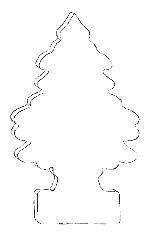
All the mentioned marks are registered in class 5 for Air fresheners. The air fresheners of JS are most commonly seen hanging from rear-view mirrors of vehicles.

On 22 January 2014, JS sought to register a figure mark (application no. 012525507) as a EUTM for goods in class 3 (Air frag­ran­cing pre­pa­ra­tions). This applied mark is visually identical with the EUTM no. 000091991.

No. 000091991.
No. 003071305.
No. 109644.


A, B and C are the members of a Finnish sketch comedy and musical trio called Justimus. The trio made a song and an album called Wunderboy and those were published by a record label Jif­fel En­ter­tain­ment Oy (Jiffel) in spring 2014. The trio has also a music video for the song Wunderboy, the video is available on YouTube (3,9 million views as of 10 July 2016) [Update on 30 August 2016: the official video was deleted from YouTube].

During the release of the album, the trio has marketed air fresheners in the shape of an evergreen tree. Some of the air fresheners were sold with the single and the album and some were sold in third-party stores. The trio has used marketing channels such as Facebook, Instagram and YouTube for the song and the album.


A Wunderboy air freshener
(an attachment from the court's decision).

JS was not amused about the creation of Wunderboy and launched trademark infringement proceedings against the trio and their record label in the Market Court. JS also brought an action for an interim injunction against the trio, but the court rejected the application in its decision 628/15 on 17 September 2015.

JS requested that the Market Court:

1. Affirms that the following trademarks have become established through use and have a reputation in Finland for Air fresheners:

- EUTM no. 004444791 WUN­DER-BAUM (word),
- EUTM no. 000091991 (figure) and
- EUTM no. 003071305 (3D),
- national trademark no. 109644 (figure) and
- the figure mark represented in the EUTM application no. 012525507.

2. Affirms that a separate WUNDER-BAUM figure mark has become established through use.

3. Affirms that Jiffel, A, B and C have infringed its trademarks described above.

4. Affirms that Jiffel, A, B and C are guilty of unfair business practice because they have used signs that are similar to the trademarks that JS uses. Jiffel, A, B and C have used the signs in their marketing, products and packages.

5. Prohibits Jiffel, A, B and C from proceeding or repeating the infringement mentioned in the request no. 3.

6. Prohibits Jiffel, A, B and C from proceeding or repeating the unfair business practice mentioned in the request no. 4. The court should impose a conditional fine of 100 000 euros to reinforce the order.

7. Orders Jiffel to pay reasonable compensation for the use of the marks, in total 50 000 euros plus legal interest.

8. Orders Jiffel to pay compensation for all the damage caused by the infringement, in total 50 000 euros plus legal interest.

9. orders Jiffel to pay JS's legal fees, in total 78 272,21 euros plus legal interest.

---

The Market Court issued its decision 374/16 (186 paragraphs) on 17 June 2016. 

The Market Court

The defendants raised first some procedural arguments, but the court dismissed these. After that it was time to assess the request no.1 of the plaintiff, i.e. do the trademarks of the plaintiff have a reputation? The court stated that there is no need to assess the establishment of the marks mentioned in the request no. 1 because the trademark registrations already provide exclusive rights for the plaintiff and the plaintiff has not claimed that the trademarks have become established for some other goods than the ones that are already covered by the registrations.

1. Do the trademarks of the plaintiff have a reputation?

The court stated that the concept of a trademark with a reputation is based on European Union legislation and on the rulings of the Court of Justice (CJ).

The court referred to the case-law of CJ. CJ has ruled in its decision C-375/97 General Motors (paras 26 and 27) that:

The degree of knowledge required must be considered to be reached when the earlier mark is known by a significant part of the public concerned by the products or services covered by that trade mark. In examining whether this condition is fulfilled, the national court must take into consideration all the relevant facts of the case, in particular the market share held by the trade mark, the intensity, geographical extent and duration of its use, and the size of the investment made by the undertaking in promoting it.

The court stated that the trademarked goods of the plaintiff are inexpensive ordinary commodities. The average consumer of the category of goods concerned is deemed to be reasonably well informed and reasonably observant and circumspect. 

The plaintiff had to prove that its trademarks have had a reputation in Finland by the time of the alleged infringement in spring 2014. Each mark was assessed separately.

1.1 The reputation of the EUTM no. 004444791 WUN­DER-BAUM (word)

The plaintiff provided evidence that it has used the WUN­DER-BAUM word mark in Finland since 1966. During the last ten years, it has sold approximately 650 000 - 1 000 000 WUN­DER-BAUM air fresheners per year. The court stated that these facts are strong indications of reputation.

The WUN­DER-BAUM air fresheners have had a high market share (76,7 percent) in Finland during the years 2012 and 2013 regarding car air fresheners. Before the years 2012-2013, the market share has been 69,5-75,5 percent. The court stated that these statistics do not provide a clear picture of the market share regarding all air fresheners but the high market share regarding car air fresheners does support the claim that the WUN­DER-BAUM has a strong reputation also regarding air fresheners in general.

The company is using more than 20 000 euros per year on marketing. The court stated that these amounts are not very significant but one has to take into account the fact that the mark has been known and has been used for decades in Finland. 

The plaintiff also provided a brand new market survey of 400 adults (dated 24 February 2016). Respondents were asked to mention a name of any car air freshener product and 62 percent of the respondents mentioned the name "Wunderbaum". Therefore, the spontaneous (or unaided) awareness was high. Moreover, 86 percent of the respondents chose the name Wunderbaum from a list that had five other product names. Therefore, the prompted (or aided) awareness was also high. The court stated that this survey does not provide a clear picture of the reputation regarding all air fresheners. Furthermore, the number of respondents is rather small. However, the survey still provides, according to the court, some information about the scale of the reputation. Even though the survey was done in 2016, two years after the conduct of the defendants, the court ruled that the survey is valid because the WUN­DER-BAUM word mark has been in use for a long time and there was no reason to assume that any significant changes had occurred in the reputation of the mark. The court stated that the result of the survey is a strong indication of reputation.

The court concluded that the WUN­DER-BAUM word mark has had a reputation in Finland since spring 2014 regarding air fresheners.

1.2 The reputation of the EUTM no. 000091991 (figure)

The plaintiff referred to the same evidence mentioned above. In the market survey, the respondents were shown a figure of an evergreen tree. According to the survey, 94 percent of the respondents found this figure familiar and 73 percent of the respondents answered "Wun­der­baum" when they were asked to name the product. The figure shown in the survey was not exactly identical with the registered EUTM. There was a small white circle in the upper part of the tree and a bow tie pattern in the stem of the tree.

The court concluded that the figure mark has had a reputation in Finland since spring 2014, despite the debilitating factors in the market survey.

Because the applied mark represented in the EUTM application no. 012525507 is visually identical with the EUTM no. 000091991, there was no need to assess the reputation separately. 

1.3 The reputation of the EUTM no. 003071305 (3D)

The plaintiff referred to the same evidence mentioned above. The court concluded that the 3D mark has had a reputation in Finland since spring 2014.

1.4 The reputation of the national trademark no. 109644 (figure)

The plaintiff referred to the same evidence mentioned above. The court concluded that the 3D mark has had a reputation in Finland since spring 2014 even though the diagonal text element WUN­DER-BAUM is not used in all the WUN­DER-BAUM air fresheners.

1.5 Conclusions

The court concluded that all the marks have had a reputation in Finland since spring 2014.

2. Has the separate WUN­DER-BAUM figure mark become established through use?

According to section 2 paragraph 1 of the Finnish Trademarks Act (7/1964), exclusive rights in a trademark may be acquired, even without registration, after the mark has become established. According to section 2 paragraph 3 of the Act, a trade symbol shall be considered established if it has become generally known in the appropriate business or consumer circles in Finland as a symbol specific to its proprietor's goods.

The court stated that the WUN­DER-BAUM figure mark has, at least, a normal distinctiveness when taking into account the fact that the dominant word element WUN­DER-BAUM has a reputation and good distinctiveness.


The separate WUNDER-BAUM figure mark
(an attachment from the court's decision).

The plaintiff provided evidence that the figure mark WUN­DER-BAUM has been in use since 2009 for packages and marketing regarding air fresheners. 

The plaintiff also referred to the high sales and high market share described above.  

The court stated that the mark has been in use only five years before the spring 2014. According to the court, this fact does not support the establishment, but it does not, per se, deteriorate it either. 

The court stated that the plaintiff has not provided any evidence, for example a market survey, that would help the court to assess whether the mark has become generally known in the appropriate business or consumer circles in Finland as a symbol specific to its proprietor's goods. 

However, the court concluded that based on the distinctiveness and the very wide use of the mark, the figure mark WUN­DER-BAUM has become established by spring 2014.

3. Is there an infringement?

3.1 Justimus air fresheners in the shape of an evergreen tree
3.1.1 The legal basis of the likelihood of confusion

According to Article 9(1)(b) of the Community trademark Regulation No 207/2009:

A Community trade mark shall confer on the proprietor exclusive rights therein. The proprietor shall be entitled to prevent all third parties not having his consent from using in the course of trade:
(b) any sign where, because of its identity with, or similarity to, the Community trade mark and the identity or similarity of the goods or services covered by the Community trade mark and the sign, there exists a likelihood of confusion on the part of the public; the likelihood of confusion includes the likelihood of association between the sign and the trade mark;

Article 5(1)(b) of the Trademarks Directive 2008/95/EC contains a similar rule. The court stated that the Finnish Trademarks Act must be interpreted in accordance with the Trademarks Directive 2008/95/EC.

According to section 4 paragraph 1 of the Trademarks Act, the effect of the rights in a trade symbol provided for in this Act is that no one other than the proprietor of the trade symbol may use in his business any symbol liable to be confused with it for his goods, whether on the goods themselves or on their packaging, in advertising or commercial documents, or in any other way, including oral use.

According to section 6 of the Trademarks Act, trade symbols shall be regarded under this Act as liable to cause confusion only if they apply to goods of identical or similar type.

The court then referred to the case-law of CJ.

CJ has ruled in its decision C-39/97 Canon (paras 26 and 29) that:

There is a likelihood of confusion within the meaning of Article 4(1)(b) of the Directive where the public can be mistaken as to the origin of the goods or services in question. Accordingly, the risk that the public might believe that the goods or services in question come from the same undertaking or, as the case may be, from economically-linked undertakings, constitutes a likelihood of confusion.

CJ has ruled in its decision C-251/95 SABEL (paras 22-23) that:


The likelihood of confusion must be appreciated globally, taking into account all factors relevant to the circumstances of the case. The global appreciation of the visual, aural or conceptual similarity of the marks in question, must be based on the overall impression given by the marks, bearing in mind, in particular, their distinctive and dominant components. The perception of marks in the mind of the average consumer of the type of goods or services in question plays a decisive role in the global appreciation of the likelihood of confusion. The average consumer normally perceives a mark as a whole and does not proceed to analyse its various details.

CJ has ruled in its decision C-342/97 Lloyd (paras 19-20) that:

The more similar the goods or services covered and the more distinctive the earlier mark, the greater will be the likelihood of confusion.

3.1.2. Likelihood of confusion between the EUTM no. 004444791 WUN­DER-BAUM (word) and the wunderboy word mark

The defendants have used a word "wunderboy" for air fresheners in the shape of an evergreen tree.

The court assessed first the visual similarity. The court stated that the words WUNDER-BAUM and wunderboy both have the same beginning "wunder". The endings of the words are different in length, also the ending letters are different. The word WUNDER-BAUM has a hyphen whereas the word wunderboy does not. The court also stated that the font of the allegedly infringing sign is irrelevant. Also it does not matter whether the word is written with small letters or capital letters. Therefore, the marks have, to some extent, a visual similarity.

The court then moved on to assess the aural similarity. The court stated that the relevant Finnish public is pronouncing the beginning of the marks similarly ("wun­derb"), whereas the pronunciation of the endings is different regarding the last sound ("-aum" and "-oi"). The court considered that the relevant Finnish public is paying more attention on the beginning of the marks. The hyphen has no relevance when assessing the aural similarity. Therefore, there is a high degree of aural similarity.

The court then moved on to assess the conceptual similarity. The court stated that the relevant Finnish public understands, mostly, also English and Swedish, but not German. However, it is likely that the public understands the meaning of the word "wunder" (wonder). On the other hand, it is not likely that the public understands the meaning of the word "baum" (tree). The relevant Finnish public understands that both marks are referring to positively "wonderful" qualities. Therefore, the marks have, to some extent, a conceptual similarity.

The court then moved on to assess the distinctiveness of the WUNDER-BAUM word mark. The court stated that the mark has a normal distinctiveness. However, the court stated that based on the very long-lasting and wide use of the mark, the WUNDER-BAUM word mark has acquired a good distinctiveness through use.

It was now time to draw a conclusion on the likelihood of confusion. The court concluded that based on the strong distinctiveness of the WUNDER-BAUM word mark, the aural similarity between the conflicting marks and the identical goods, there is a likelihood of confusion between the EUTM no. 004444791 WUN­DER-BAUM (word) and the wunderboy word mark.

3.1.3 Likelihood of confusion between the EUTM no. 000091991 (figure), the EUTM no. 003071305 (3D) and the Justimus tree sign

The court considered first the likelihood of confusion between the EUTM no. 000091991 (figure) and the Justimus tree sign. The court stated that the two trees are very similar and it is difficult to notice any differences between the marks. Despite the other elements in the Justimus tree (the Justimus logo and the text "Wunderboy"), the two marks are very similar.

The court considered then the likelihood of confusion between the EUTM no. 003071305 (3D) and the Justimus tree sign. The court stated that the two marks are very similar. The Justimus tree has a hole in the upper part of the tree but this element is so secondary compared to the other elements that it does not diminish the similarity between the marks.

The marks are also conceptually similar: they are referring to an evergreen tree. Furthermore, the marks have identical goods.

The court concluded that there is a likelihood of confusion between the EUTM no. 000091991 (figure), EUTM no. 003071305 (3D) and the Justimus tree sign.

3.1.4 Likelihood of confusion between the national trademark no. 109644 (figure) and the Justimus tree sign

The court considered that the two marks are very similar. However, there are some differences. The Justimus tree has slightly rounder branch tips compared to the registered national mark. The Justimus tree sign has also a text element "Wunderboy" placed inside the rectangle below the tree. Also the text elements placed inside the tree are different ("WUN­DER-BAUM" vs. "AMIS­POP NE­VER STOP"). The court considered that the visual appearance of these text elements is, however, very similar. The texts have been placed diagonally in two lines and have a very similar font.

The court then considered the aural similarity. The registered national mark has only one text element whereas the Justimus tree sign has two. There is a minimal degree of aural similarity.

The court then moved on to assess the conceptual similarity. The marks have some similarity regarding the text elements "wun­der-baum" and "wun­der­boy". However, the text element "amis­pop ne­ver stop" is diminishing the similarity. The text element is a slogan that is admiring a certain type of pop music. Both marks have a tree element and those elements are very similar. Therefore, the marks have, to some extent, a conceptual similarity.

The court then moved on to assess the distinctiveness of the registered national trademark. The court stated that the mark has a normal distinctiveness. However, the mark also has a reputation as described above and it has acquired a good distinctiveness through use.

The court concluded that there is a likelihood of confusion between the national trademark no. 109644 (figure) and the Justimus tree sign.

3.1.5 Likelihood of confusion between the established WUN­DER-BAUM figure mark and the WUNDERBOY figure mark

The visual appearance of the marks is very similar. Both marks have a red arched rectangle and below the rectangle there is a black line. The tone of the color red is slightly different. The text elements have a slight difference in their wording, but the font is very similar. Therefore, there is a very high degree of visual similarity.


The WUNDERBOY figure mark
(an attachment from the court's decision).


The court then moved on to assess the aural similarity and referred to the assessment above (3.1.2) and stated that there is a high degree of aural similarity.

The court then moved on to assess the conceptual similarity and referred again to the assessment above (3.1.2) and stated that the marks have, to some extent, a conceptual similarity.

The court concluded that there is a likelihood of confusion between the established WUN­DER-BAUM figure mark and the WUNDERBOY figure mark.

3.2 The marketing of the Wunderboy album and the song
3.2.1 The scope of protection afforded to marks with reputation

According to Article 9(1)(c) of the Community trademark Regulation No 207/2009:

A Community trade mark shall confer on the proprietor exclusive rights therein. The proprietor shall be entitled to prevent all third parties not having his consent from using in the course of trade:
(c) any sign which is identical with, or similar to, the Community trade mark in relation to goods or services which are not similar to those for which the Community trade mark is registered, where the latter has a reputation in the Community and where use of that sign without due cause takes unfair advantage of, or is detrimental to, the distinctive character or the repute of the Community trade mark.

Article 5(2) of the Trademarks Directive contains a similar rule. The court stated again that the Finnish Trademarks Act must be interpreted in accordance with the Trademarks Directive. Section 6 paragraph 2 of the Trademarks Act contains a rule regarding the scope of protection afforded to marks with reputation.

The court then referred to the case-law of CJ. CJ has ruled, in essence, that it is sufficient for the degree of similarity between the mark with a reputation and the other sign to have the effect that the relevant section of the public establishes a link between the sign and the mark. No likelihood of confusion is required between them on the part of the relevant section of the public (see C-408/01 Adi­das Be­ne­lux, para 31).

The existence of the link mentioned above must be assessed globally, taking into account all factors relevant to the circumstances of the case. According to C-252/07 In­tel (para 42), those factors include:

- The degree of similarity between the conflicting marks, in particular visual, aural or conceptual similarity (see C-408/01 Adi­das Be­ne­lux, para 28).
- the nature of the goods or services for which the conflicting marks were registered, including the degree of closeness or dissimilarity between those goods or services, and the relevant section of the public;
- the strength of the earlier mark's reputation;
- the degree of the earlier mark's distinctive character, whether inherent or acquired through use;
- the existence of the likelihood of confusion on the part of the public.¨

3.2.2 The use of signs including the word "wunderboy"

So the court had to assess first whether there is a similarity link between the conflicting marks. If such link exists, the court has to then asses whether the defendants' trademark use without due cause takes unfair advantage of, or is detrimental to, the distinctive character or the repute of the plaintiff's trademarks (see C-487/07 L'Oréal, paras 37-38).

The defendants have used the wunderboy word mark and also the WUNDERBOY figure mark when they have marketed the album and the song.

The court stated that based on, inter alia, the good distinctiveness of the WUNDER-BAUM word mark and the degree of similarity, the relevant section of the public establishes a link between the reputed WUNDER-BAUM word mark, the WUNDERBOY figure mark and the wunderboy word mark.

Now the court had to assess whether the defendants' trademark use without due cause takes unfair advantage of, or is detrimental to, the distinctive character or the repute of the plaintiff's trademarks. One of those three types of injury is enough for the rule to apply.

CJ has ruled in its decisions C-252/07 In­tel (paras 67-69) and C-487/07 L'Oréal (para 44) that:

As regards the strength of the reputation and the degree of distinctive character of the mark, the Court has already held that, the stronger that mark’s distinctive character and reputation are, the easier it will be to accept that detriment has been caused to it. It is also clear from the case-law that, the more immediately and strongly the mark is brought to mind by the sign, the greater the likelihood that the current or future use of the sign is taking, or will take, unfair advantage of the distinctive character or the repute of the mark or is, or will be, detrimental to them.


CJ has ruled in its decision C-487/07 L'Oréal (paras 41, 44 and 49) that:

As regards the concept of ‘taking unfair advantage of the distinctive character or the repute of the trade mark’, also referred to as ‘parasitism’ or ‘free-riding’, that concept relates not to the detriment caused to the mark but to the advantage taken by the third party as a result of the use of the identical or similar sign. It covers, in particular, cases where, by reason of a transfer of the image of the mark or of the characteristics which it projects to the goods identified by the identical or similar sign, there is clear exploitation on the coat-tails of the mark with a reputation.


In order to determine whether the use of a sign takes unfair advantage of the distinctive character or the repute of the mark, it is necessary to undertake a global assessment, taking into account all factors relevant to the circumstances of the case, which include the strength of the mark’s reputation and the degree of distinctive character of the mark, the degree of similarity between the marks at issue and the nature and degree of proximity of the goods or services concerned.


In that regard, where a third party attempts, through the use of a sign similar to a mark with a reputation, to ride on the coat-tails of that mark in order to benefit from its power of attraction, its reputation and its prestige, and to exploit, without paying any financial compensation and without being required to make efforts of his own in that regard, the marketing effort expended by the proprietor of that mark in order to create and maintain the image of that mark, the advantage resulting from such use must be considered to be an advantage that has been unfairly taken of the distinctive character or the repute of that mark.

The defendants have used the WUNDERBOY figure mark when they have promoted their music. As mentioned above, this figure mark has a very high degree of visual similarity with the established WUNDER-BAUM figure mark. The WUNDERBOY figure mark contains a text element "wunderboy" that is similar with the WUN­DER-BAUM word mark. According to the court, there is a strong association, based on the way the defendants have used the mark, between the WUNDERBOY figure mark and the reputed WUN­DER-BAUM word mark. In their own Facebook page, the defendants have even promised to deliver "their own wunderbaum" to the ones who have pre-ordered the album. 

According to the court, the defendants have, while using the WUNDERBOY figure mark, aimed to benefit from the distinctiveness and the reputation of the WUNDER-BAUM word mark. Therefore, the sign has taken unfair advantage of the distinctive character or the repute of the mark.

The plaintiff argued that also the use of the wunderboy word mark, as such, has taken unfair advantage of the distinctive character or the repute of the WUN­DER-BAUM word mark. The court rejected this argument and stated that the use of the wunderboy word mark, as such, without any figures similar to the WUNDER-BAUM figure mark, does not establish as strong association as the WUNDERBOY figure mark does. Therefore, the wunderboy word mark has not taken unfair advantage of the distinctive character or the repute of the WUN­DER-BAUM word mark.

The plaintiff argued that the use of the wunderboy word mark is, however, detrimental to the distinctive character or the repute of the WUNDER-BAUM word mark. According to the plaintiff, there is a danger that the relevant section of the public starts to understand that a text element beginning with the expression "WUN­DERB" is generic for the car air fresheners. Furthermore, the defendants' song and the music video includes use of alcohol in a car and sexual innuendo involving minors and violence. 

The court rejected this. The court stated that the defendants have, mainly, used the wunderboy word mark in order to promote the song and the album. This kind of use does not cause detriment to the distinctive character or the repute of the WUNDER-BAUM word mark. According to the court, the association between the marks is not strong enough. 

Therefore, the use of the wunderboy word mark, as such, in order to promote the song and the album, has not infringed the WUNDER-BAUM word mark.

3.2.3 The use of the Justimus tree sign

Again, the court had to assess first whether there is a similarity link between the conflicting marks. If such link exists, the court has to then asses whether the defendants' trademark use without due cause takes unfair advantage of, or is detrimental to, the distinctive character or the repute of the plaintiff's trademarks.

The defendants have used the Justimus tree sign when they have marketed the album and the song.

The court referred to the assessment above (3.1.3) regarding the likelihood of confusion between the EUTM no. 000091991 (figure) and the Justimus tree sign. In that assessment it was stated that there is a high degree of similarity between the two marks.

It is true that the corresponding goods are very different. However, according to the court, the average consumer of these products (air fresheners vs. songs and albums) concerned is deemed to be reasonably well informed and reasonably observant and circumspect, and it is likely that the reputed mark of the plaintiff is known among the customers who buy music from the defendants. Therefore, the court stated that the relevant section of the public establishes a link between the reputed EUTM no. 000091991 (figure) and the Justimus tree sign.

Now the court had to assess whether the defendants' trademark use without due cause takes unfair advantage of, or is detrimental to, the distinctive character or the repute of the EUTM no. 000091991 (figure). One of those three types of injury is enough for the rule to apply.

The court stated that since the two marks are so similar, it is obvious that the defendants have benefited from the distinctiveness and the reputation of the EUTM no. 000091991 (figure). In their own Facebook page, the defendants have even promised to deliver "their own wunderbaum" to the ones who have pre-ordered the album. Therefore, the Justimus tree sign has taken unfair advantage of the distinctive character or the repute of the EUTM no. 000091991 (figure)

3.2.4 The character dressed in a tree costume in the Wunderboy music video

Amusingly enough, the defendants' music video includes a character dressed in a tree costume. The character is dancing in the video. There is a text "WUNDER-BOY" written on the costume. The plaintiff argued that the use of this character is infringing the reputed national trademark no. 109644 (figure).


Like two peas in a pod?

The court stated that the purpose of the music video is to promote the song and the album. The court continued by stating that the relevant public will associate the character with the reputed national trademark no. 109644 (figure) even though the tree costume is only roughly similar to the trademark. However, the dominant elements are the same: an evergreen tree and a text element placed diagonally in two lines. Therefore, the use of the character has taken unfair advantage of the distinctive character or the repute of the reputed national trademark no. 109644 (figure).

3.2.5 Parody argument
The defendants did not claim that they had "due cause" to use the infringing signs. However, they argued that the use of the signs was merely a parody. They explained that the song and the music video makes fun of a certain type of young men and the use of air fresheners in the shape of an evergreen tree is a part of the lifestyle of those men.

According to the court, the use of signs, that are identical or similar to another's trademarks, in marketing or in other business, is not justifiable only because of the product promoted by the signs, for example an album or a song, includes humorous references to a phenomenon that may also have some connection with the trademarks of another.

[It is somewhat disappointing that the parody assessment is so short. Trademark parodies are quite rare and it would have been interesting to see a more profound assessment in this respect.]

3.3 Conclusions
Therefore, the defendants have infringed the trademarks of the plaintiff by using the following signs for air fresheners:

- the wunderboy word mark, 
- the Justimus tree sign and 
- the WUNDERBOY figure mark. 

Furthermore, the defendants have infringed the trademarks of the plaintiff by using the following signs for the song and the album:

- the WUNDERBOY figure mark,
- the Justimus tree sign and
- the character dressed in a tree costume.

The court prohibited the defendants from proceeding with or repeating the acts.


4. Compensation and Damages

4.1 Assessment

According to section 38 paragraphs 2 and 3 of the Trademarks Act, any person who deliberately or due to negligence infringes the right to a trade symbol shall be obliged to pay the aggrieved party a reasonable compensation for the use of the symbol and a compensation for all the damage caused by the infringement. If the negligence has only been slight, the compensation for the damage may be adjusted. Even if no negligence is found, the infringer is obliged to pay a reasonable compensation for the use of the symbol.

According to Government Bill 26/2006 of the Act, the reasonable compensation for the use of the symbol must be paid even if there is no financial loss for the infringed party. The amount should be calculated on the basis of a licence fee.

The plaintiff requested the court to order the defendant to pay compensation for the use of the marks, in total 50 000 euros plus legal interest. According to the plaintiff, 9 000 euros of that amount is the amount of the license fee and the remaining 41 000 euros is the amount that the defendants have otherwise benefited in the form of concerts, other albums and other merchandise.

The court had to assess first the reasonable compensation for the use of the plaintiff's trademarks. It had to determine the amount of profit that the defendants had gained from the sales of products bearing the infringing signs. The court had to then determine the amount of the license fee. After that it had to assess whether there is a reason to order the defendant to pay compensation also from the allegedly acquired benefit concerning the sales of concerts, other albums and other merchandise.

According to the defendants, 9 600 air fresheners were sold to third-party stores and the defendant profited 11 308,80 euros from that (1,178 euros per air freshener). Furthermore, 350 air fresheners were sold to the ones who had pre-ordered the album. However, the defendant provided evidence that 8 041 air fresheners of the 9 600 that were sold to the third-party stores were destroyed after the request from the defendant. The defendant argued that this should decrease the amount of profit. The court rejected this because the defendant did not claim that it had refunded any of the 11 308,80 euros paid by the third-party stores. The court stated that the defendant has profited approximately 12 000 euros from the sales of the Justimus air fresheners. 

The court stated also that the defendant has profited 25 200 euros from the sales of the physical Wunderboy albums. 

The court stated also that the defendant has profited approximately 5 520 euros from the sales of the digital Wunderboy products. 

According to the court, the total sales were approximately 42 500 euros. 

The plaintiff provided evidence that it has normally used a royalty rate of 10 percent. The plaintiff argued that in this case the royalty rate should be 20 percent because of the detrimental use of the signs. The court considered that a royalty rate of 15 percent is suitable in this case when taking into account the nature of the use and that the use has infringed several trademarks.

The court had to consider then whether there is a reason to order the defendant to pay compensation also from the allegedly acquired benefit concerning the sales of concerts, other albums and other merchandise. The court rejected this request as unfounded. According to the court, the plaintiff did not, inter alia, provide any concrete evidence of the alleged profit that the defendants had gained this way.

Therefore, the court ordered the defendant to pay compensation for the use of the marks, in total 6 375 euros plus legal interest.

---

The plaintiff reguested the court to order the defendant to pay compensation for all the damage caused by the infringement, in total 50 000 euros plus legal interest. 

The court stated that the defendant was aware of the trademarks of the plaintiff at the time when it was planning to promote the Wunderboy album and the song. Therefore, it has acted, at least, due to negligence that is not slight.

The plaintiff argued that the Justimus air fresheners have caused lost sales, in total 13 000 euros.

The plaintiff argued also that the conduct of the defendants has caused detriment to the distinctive character and the goodwill of its trademarks. The defendants' song and the music video includes use of alcohol in a car and sexual innuendo involving minors and violence.

According to Government Bill 26/2006 of the Trademarks Act, the damages consist of the losses of the proprietor. The proprietor has to provide evidence of these losses. Proprietors usually seek recovery of their lost profits. It is often difficult to assess the amount of lost profits, but for example falls in sales can provide evidence of the lost profits. It is even more difficult to estimate the detriment to the distinctive character and the goodwill of the trademarks.

The court stated that the conduct of the defendants has caused some lost sales. This is mainly based on the profits gained by the defendants. However, 8 041 air fresheners were destroyed and less than 3 000 air fresheners ended up to the consumers. Therefore, the court assessed that the lost profits are 3 000 euros.

The plaintiff could not provide evidence of the detriment to the distinctive character and the goodwill of the trademarks. However, the court stated that the conduct of the defendants has, to some extent, caused detriment to the trademarks. The court emphasized that the use of the infringing signs has, especially in the music video, received a large audience.  

According to chapter 17 section 2 paragraph 3 of the Code of Judicial Procedure (4/1734, as amended in 2016), if credible evidence is not available regarding the amount of a claim under private law or such evidence is obtainable only with difficulty or, in view of the nature of the case, with unreasonable cost or difficulty, the court shall assess the amount. The court assessed that the amount is 10 000 euros.

4.2 Conclusions

The court ordered the defendant to pay compensation for the use of the marks, in total 6 375 euros plus legal interest. 

Furthermore, the court ordered the defendant to pay compensation for all the damage caused by the infringement, in total 13 000 euros plus legal interest.


5. Are the defendants guilty of unfair business practice (reputation parasitism)?

The plaintiff requested the court to affirm that the defendants are guilty of unfair business practice because they have used signs, that are similar to the trademarks that the plaintiff uses, in their marketing, products and packages. The plaintiff requested the court to prohibit the defendants from proceeding or repeating unfair business practice mentioned in the request no. 4. The court should impose a conditional fine of 100 000 euros to reinforce the order.

The court stated that there is no need to assess the requirements of unfair business practice since the court has affirmed the requests no. 3 and 5 (trademark infringement and prohibition from proceeding with or repeating the act). The plaintiff has referred to the same conduct that has been assessed above regarding the trademark infringement.

The plaintiff specified its requests and added that the court should still assess whether the use of the word "wun­der­boy" in the song Wunderboy can be considered as unfair business practice. Furhermore, according to the plaintiff, the court should assess whether the use of "wunderboy", as such, in order to promote the song and the album, is against unfair business practice. [The court had found earlier that the use of the wunderboy word mark, as such, in order to promote the song and the album, has not infringed the reputed WUNDER-BAUM word mark.]

The court agreed to assess this updated request.

According to section 1 paragraph 1 of the Unfair Business Practices Act (1061/1978), good business practice may not be violated nor may practices that are otherwise unfair to other entrepreneurs be used in business.

It has been ruled in the Finnish case-law that the section 1 paragraph 1 of the Unfair Business Practices Act prohibits anyone from taking undue advantage of another's goodwill (in trademarks, products, business concepts etc). This is also known as 'reputation parasitism' ('maineen norkkiminen' in Finnish).

Also according to Article 15 of the ICC Code on Advertising Practice, marketing communications should not in any way take undue advantage of another firm's, individual's or institution's goodwill in its name, brands or other intellectual property, or take advantage of the goodwill earned by other marketing campaigns without prior consent.

The court stated that there are two requirements for reputation parasitism. Firstly, the alleged victim mark of the reputation parasitism has to be well-known in the market and have a reputation. Secondly, there has to be an association between the conflicting marks and the one who has created the association is aiming to exploit the goodwill of the other mark. The court added that the reputation parasitism does not require, per se, that the conduct misleads the average consumer about the commercial origin of the product.

The court found earlier that the WUNDER-BAUM word mark has a reputation in Finland since spring 2014. Therefore it has, according to the court, the goodwill that the assessment of the reputation parasitism requires.

Now the court had to assess whether the defendants have, while using the word "wunderboy", created an association between the word "wunderboy" and the WUNDER-BAUM word mark among the reasonably well-informed and reasonably observant and circumspect average consumers.

The court assessed first the use of the word "wunderboy" in the song. The court examined the lyrics of the song and stated that the word is clearly referring to a young man who is a member of this certain subculture. The court considered that the word is not, as such, referring to the WUNDER-BAUM word mark or to the products of the plaintiff. Therefore, there is no reputation parasitism in this regard.

The court assessed then the use of the word "wunderboy" in the promotion of the song and the album. The court admitted that the use of the word "wunderboy" can create an association between the word and the WUNDER-BAUM word mark and the air fresheners sold by the word mark. However, taking into account, inter alia, the meaning that the word "wunderboy" has in the song, this association is considered to be very weak. Therefore, there is no reputation parasitism in this regard either.

6. Verdict

1. The court affirmed that the following trademarks have a reputation in Finland for Air fresheners since spring 2014:

- EUTM no. 004444791 WUN­DER-BAUM (word),
- EUTM no. 000091991 (figure),
- EUTM no. 003071305 (3D),
- national trademark no. 109644 (figure) and
- the figure mark represented in the EUTM application no. 012525507.

2.  The court affirmed that the separate WUNDER-BAUM figure mark has become established through use since spring 2014.

3. The court affirmed that the defendants have infringed the trademarks described above when they have marketed and sold the air fresheners.

4. The court affirmed that the defendants have infringed the reputed trademarks described above when they have marketed and sold the song and the album.

5. The court prohibited the defendants from proceeding with or repeating the act described in 3-4.

6. The court ordered the defendant to pay reasonable compensation for the use of the marks, in total 6 375 euros plus legal interest.

7. The court ordered the defendant to pay compensation for all the damage caused by the infringement, in total 13 000 euros plus legal interest.

8. The court ordered the defendant to pay the plaintiff's legal fees, in total 52 000 euros plus legal interest.

9. The court dismissed the other requests.

Monday, 4 July 2016

The Market Court and Three Interim Injunction Decisions (Rim Designs and Center Caps)

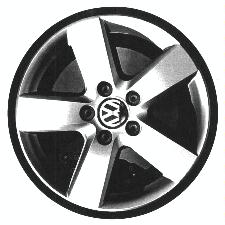
The Market Court issued three interim injunction decisions (358/16, 359/16 and 360/16) on 15 June. In all these decisions, Volks­wa­gen AG (Volkswagen) is the plaintiff.

According to Volkswagen, three Finnish companies were marketing and selling without permission rims that were identical or similar with registered designs belonging to Volkswagen. According to Volkswagen, two of the three companies were also marketing and selling without permission center caps (for rims) that were practically identical with a registered European Union trademark belonging to Volkswagen.

---

In an application against Rengas Turku Oy (Rengas Turku), Volkswagen requested the court to:

1. Prohibit the defendant from using, offering, marketing, selling, importing, exporting or storing the following rim designs:

- RE SCI­ROC­CO GI­NOST­RA W456
- RE SCI­ROC­CO GI­NOST­RA W456 BLACK
- RE W463 CROSS
- IMA­GE TO­RI­NO

According to Volkswagen, these rim designs are identical or similar with the registered community designs 000135199-0042, 000603857-0001 and the registered international design DM/077 557.

Volkswagen also requested the court to prohibit Rengas Turku from using, offering, marketing, selling, importing, exporting or storing center caps that were practically identical with the registered European Union trademark 000703983. Volkswagen specified that the infringing center caps are included in the rim designs RE W463 CROSS and IMA­GE TO­RI­NO.

Volkswagen also requested the court to impose a conditional fine of 200 000 euros to reinforce the orders.

2. Seize all the infringing rim designs.

3. Order that all accounting documents (invoices, sales documents and receipts) regarding the infringing rim designs are copied permanently by the bailiff and handed over to Volkswagen.

---

In an application against vannetukku.fi Oy (vannetukku.fi), Volkswagen pretty much repeated the requests mentioned above. This time the defendant was marketing and selling rim designs named as 'Fit for VW Re­per­bahn' and those designs were, according to Volkswagen, infringing the registered international design WO DM/079 881-1. In this case there were no requests regarding center caps.

In an application against OEMPLUS Oy (OEMPLUS), Volkswagen repeated again the requests mentioned in the first application with the exception that this time there was a more comprehensive list regarding rim designs marketed and sold by the defendant:

- 16992 volks­wa­gen-ria­ce-anth­ra­ci­te-po­lis­hed
- 17002 volks­wa­gen-gi­nost­ra-sil­ver
- 17009 volks­wa­gen-ros­tock-sil­ver
- 17025 volks­wa­gen-linz-sil­ver-po­lis­hed-lip
- 17026 volks­wa­gen-dha­ka-sil­ver-po­lis­hed and 17027 volks­wa­gen-dha­ka-sil­ver
- 17037 volks­wa­gen-cip­rus-anth­ra­ci­te-po­lis­hed and 17042 volks­wa­gen-cip­rus-glos­sy-black-lip-po­lis­hed
- 17041 volks­wa­gen-cip­rus-sil­ver-po­lis­hed
- 17043 volks­wa­gen-spar­ta-sil­ver-po­lis­hed
- 17048 volks­wa­gen-an­ka­ra-sil­ver
- 18371 volks­wa­gen-r-ni­si­da ja 18372 volks­wa­gen-r-ni­si­da-black
- 18502 volks­wa­gen-sa­ha­ra-matt-gun­me­tal, 18503 volks­wa­gen-sa­ha­ra-sil­ver-po­lis­hed-lip and 18504 volks­wa­gen-sa­ha­ra-sil­ver
- 18539 volks­wa­gen-cross-anth­ra­ci­te-po­lis­hed
- 18540 volks­wa­gen-cross-hy­per-sil­ver.

According to Volkswagen, those rim designs are identical or similar with the registered community designs 000135199-0001, 000135199-0007, 000135199-0025, 000135199-0036, 000135199-0042, 000603857-0001 000848361-0001 and the registered international designs DM/077 557 and DM/079 881.

Furthermore, OEMPLUS is marketing and selling center caps that are, according to Volkswagen, infringing the registered European Union trademark 000703983.

Volkswagen also requested the court to seize the infringing center caps.

Registered Community Design 000135199-0042.

The Market Court and the Volkswagen's requests no. 1-2

The Market Court stated that the requests no. 1-2 in the Volkswagen's applications are based on chapter 7 section 3 of the Code of Judicial Procedure (4/1734). According to that rule, there are three requirements that must be fulfilled before an interim injunction can be granted: claim requirement, danger requirement and comparison of interest / unreasonable inconvenience.

1) Claim requirement; the right holder needs to demonstrate that it is probable that he or she has a right that is enforceable against the opposing party.

The court referred to earlier Supreme Court rulings 1994:132, 1994:133, 1998:143, 2000:94 and 2003:118. In the rulings 1998:143, 2000:94 and 2003:118, the Supreme Court has stated that the threshold for granting an interim injunction is considerably higher in cases in which the interim injunction would lead to a situation where the applicant achieves in advance the same outcome, which is the subject of the claims in the main proceedings (etukäteisnautinta in Finnish).

In the application against Rengas Turku, Volkswagen claimed that Rengas Turku is marketing and selling, in its own online store, without permission rims that are identical or similar with the registered designs belonging to Volkswagen. Volkswagen also claimed that some of the rims have a center cap that is practically identical with the registered European Union trademark belonging to Volkswagen. Rengas Turku did not deny these claims, it only stated that it has removed the allegedly infringing rims and center caps from sale. The court ruled that, based on the evidence provided in the case and the fact that Rengas Turku has not denied the claims, Volkswagen has an enforceable right against Rengas Turku.

In the application against vannetukku.fi, Volkswagen claimed that vannetukku.fi is marketing and selling, in its own online store, without permission rims that are identical or similar with the registered international design DM/079 881-1 belonging to Volkswagen, applied on 19 December 2012. Vannetukku.fi denied the claims because the rim named 'Fit for VW Re­per­bahn' is based on a registered community design 002649970-0025 (applied 10 March 2015) belonging to Paalupaikka Oy, a subsidiary company of vannetukku.fi. According to vannetukku.fi, the presumption of validity rule is giving the company the right to sell and market the design rim as long as the said design right is valid. The rule is expressed in Article 85 of the Community Design Regulation No 6/2002. Furthermore, vannetukku.fi denied the claims because it considers that the design right belonging to Volkswagen is not new and it covers a spare part of a car and those kind of spare parts can not obtain any community design right.

The court had to assess whether it is probable that the sold and marketed rims are infringing the registered design right belonging to Volkswagen. The court stated that vannetukku.fi did not deny that the marketed and sold rims are identical or similar with the registered design right belonging to Volkswagen. According to the court, the fact that the subsidiary company of vannetukku.fi has the registered community design does not, per se, have a significance. When a community design is applied, there is a minimal official examination of an application, and no official searches, for example regarding novelty, are carried out as provided in Article 47 of the Regulation. Therefore, it is possible that an applied community design will be registered even though it is identical with an earlier registered community design. 

The court also stated that the presumption of validity provided in the Article 85 is not protecting the vannetukku.fi in this case. The presumption of validity is only protecting the allegedly infringed design. The court stated that in this case the presumption of validity actually protects the registered international design DM/079 881-1 belonging to Volkswagen, and that this design shall be treated as valid, despite the claims regarding a lack of novelty and the rim not being able to obtain any community design right. Even if this was not the case, vannetukku.fi has not provided any evidence that the registered international design DM/079 881-1 lacks novelty. Therefore, the court stated that Volkswagen has an enforceable right against vannetukku.fi.

In the application against OEMPLUS, Volkswagen claimed that OEMPLUS is marketing and selling, in its own online store, without permission rims that are identical or similar with the registered community designs 000135199-0001, 000135199-0007, 000135199-0025, 000135199-0036, 000135199-0042, 000603857-0001, 000848361-0001 and registered international designs DM/077 557 ja DM/079 881 belonging to Volkswagen. Volkswagen also claimed that some of the rims have a center cap that is practically identical with the registered European Union trademark belonging to Volkswagen. OEMPLUS did not deny these claims, it only stated that it has removed the allegedly infringing rims and center caps from sale. OEMPLUS also stated that this was an unintended infringement that was interfered with immediately when the company noticed it. The court ruled that, based on the evidence provided in the case and the fact that OEMPLUS has not denied the claims, Volkswagen has an enforceable right against Rengas Turku.

2) Danger requirement; there is a danger that the opposing party by deed, action or negligence or in some other manner hinders or undermines the realisation of the right of the applicant or decreases essentially its value or significance,

The court referred to earlier Supreme Court rulings 1994:132 and 1994:133 where the Supreme Court has ruled that the danger requirement is fulfilled if the danger is not very improbable based on the circumstances in the case.

The defendant Rengas Turku has marketed and sold allegedly infringing rims and some of the rims have allegedly infringing center caps. The company stated that it has removed the products from sale, but admitted that it still has some in its storage. Therefore, the court stated that the danger requirement is sufficiently fulfilled.

The defendant vannetukku.fi has marketed and sold allegedly infringing rims. Volkswagen provided evidence that it has purchased four allegedly infringing rims named 'Fit for VW Re­per­bahn' from the online store of vannetukku.fi on 16 February 2016. Therefore, the court stated that the danger requirement is sufficiently fulfilled.

The defendant OEMPLUS has marketed and sold allegedly infringing rims and some of the rims have allegedly infringing center caps. Volkswagen provided evidence that it has purchased four allegedly infringing rims named 'R" Ni­si­da 19' from the online store of OEMPLUS on 16 February 2016. OEMPLUS stated that it has removed the products from sale. The company also stated that it does not have any rims or center caps anymore in its storage. Nevertheless, the court stated that the danger requirement is sufficiently fulfilled.

3) Comparison of interest / unreasonable inconvenience; the opposing party does not suffer undue inconvenience in comparison with the benefit to be secured.

Volkswagen stated that the interim injunction can not cause any unreasonable financial inconvenience to Rengas Turku because the allegedly infringing rims are only a small part of all the rims provided by Rengas Turku in its online store. According to Volkswagen, dismissal of the application (for an interim injunction) would cause sales decrease and possible detriment to its brand. According to Rengas Turku, the interim injunction is not necessary because it has removed the products from sale. The court ruled that, based on the evidence provided in the case and the rule that the applicant who has unnecessarily resorted to a precautionary measure is liable to compensate the opposing party for the damage caused by the precautionary measure and its enforcement, and to cover the expenses incurred, Rengas Turku does not suffer undue inconvenience. The liability to compensate the damage and cover the expenses is expressed in chapter 7 section 3 of the Code of Judicial Procedure.

In the application against van­ne­tuk­ku.fi, Volkswagen expressed the same arguments mentioned above regarding the comparison of interest / unreasonable inconvenience. Vannetukku.fi argued that it has a very big storage that consists mainly of tires. According to the company, it has only two allegedly infringing rims left in its storage. The court ruled the same way as mentioned above regarding the application against Rengas Turku.

In the application against OEMPLUS, Volkswagen expressed the same arguments mentioned above regarding the comparison of interest / unreasonable inconvenience. Vannetukku.fi only stated that it has more than 16 000 products for sale in its online store. The court ruled the same way as mentioned above regarding the applications against Rengas Turku and vannetukku.fi.

---

In all the cases, the court stated that it is possible to order an interim injunction regarding the request no. 1. The court also stated that the request no. 2 (seizure) is not necessary because the court will impose a conditional fine to reinforce the orders regarding the request no. 1. Therefore, the request no. 2 was dismissed. The conditional fine is 30 000 euros regarding Rengas Turku and OEMPLUS and 50 000 euros regarding vannetukku.fi.

The Market Court and the Volkswagen's request no. 3

The Volkswagen's request no. 3 (copying and handing over the accounting documents) is based on sections 2 and 3 of the Act on Securing Evidence in Civil Matters concerning Industrial Rights and Copyrights (344/2000). According to the section 2, the court can give a seizure order concerning any material that can have a significance in the case in question. The opposing party shall not suffer undue inconvenience in comparison with the benefit to be secured (comparison of interest / unreasonable inconvenience). According to the section 3, the right holder needs to demonstrate that it is probable that he or she has a right that is enforceable against the opposing party, and the right is being infringed or that such infringement is imminent (claim requirement). Furthermore, there is a danger that the opposing party, or the one who has the material, conceals, destroys or hands over the evidence or in some other manner endangers the preservation of the evidence (danger requirement).

All in all, the requirements for the interim injunction are pretty much the same as the requirements regarding the chapter 7 section 3 of the Code of Judicial Procedure.

In all the applications, Volkswagen has argued that the preservation of the accounting documents is important in order to launch an infringement proceedings and determine the claim for compensation.

The court assessed first the claim requirement. The court stated that the claim requirement is fulfilled also regarding the request no. 3 and the accounting documents mentioned in the request have, per se, a significance in the cases in question.

The court then assessed the danger requirement. According to Volkswagen, there is a substantial danger that the evidence is not going to be preserved, in its entirety, without a seizure. There is a considerable risk that the defendants could, for example, destroy some relevant receipts or sales orders.

The court stated that chapter 2 sections 9 and 10 of the Accounting Act (1336/1997) are providing information on how and how long to preserve accounting documents. Furthermore, chapter 30 section 9 of the Criminal Code of Finland (39/1889) provides that if a person with a legal duty to keep accounts, his or her representative, a person exercising actual decision-making authority in a corporation with a legal duty to keep books, or the person entrusted with the keeping of accounts, destroys, conceals or damages accounting documentation and in this way impedes the obtaining of a true and sufficient picture of the financial result of the business of the said person or of his or her financial standing, he or she shall be sentenced for an accounting offence to a fine or to imprisonment for at most two years.

Therefore, according to the court, it is very improbable that the defendants would destroy any of the evidence mentioned in the request no. 3. The danger requirement is not fulfilled and there was no need to assess the comparison of interest / unreasonable inconvenience.

The request no. 3 was dismissed.

---

Enforcement and security

According to chapter 7 section 3 paragraph 3 of the Code of Judicial Procedure, a prerequisite for the entry into force of the interim injunction is that the applicant applies for enforcement of a precautionary measure as provided in chapter 8 of the Enforcement Code (705/2007).  According to chapter 8 section 2 paragraph 1 of the Enforcement Code, enforcement of a precautionary measure requires that the applicant lodges with the bailiff security for loss that the respondent may incur as a result of the precautionary measure. According to chapter 8 section 3 of the Enforcement Code, the defendant can lodge a security in order to prevent the enforcement. 

The main proceedings

According to chapter 7 section 6 paragraph 1 of the Code of Judicial Procedure, when the interim injunction application has been granted, the applicant shall within one month of issue of the order bring an action on the main issue before a court or bring the main issue up for consideration in other proceedings that may result in a decision enforceable in accordance with chapter 2 section 2 of the Enforcement Code. If the consideration of the issue is not initiated within said period, or if the case is discontinued, the preliminary injunction shall be reversed, as provided in chapter 8 section 4 of the Enforcement Code.