Showing posts with label interim injunction. Show all posts

Thursday, 7 July 2016

The Market Court and an Interim Injunction (Alleged Utility Model Registration in Bad Faith)

Background

In November 2012, a company B (B) filed a utility model application for an invention 'Attachment arrangement'. The invention consisted of independent claim 1 and dependent claims 2-5. The Finnish Patent and Registration Office (PRH) registered the utility model (no. 9968) on 28 January 2013. 

Utility Model Registration no. 9968.

In 2014, a company A (A) lodged an invalidity claim against the registered utility model. The A provided prior art documents D1-D8. In 2015, the A added a prior art document D9. Basically the A wanted to prove that it has been selling an apparatus that is identical with the utility model and that these sales have occurred before the B filed the utility model application in 2012. 

In 2015, PRH confirmed in its decision that the documents D2-D4 and D9 cover the apparatus described in the claim 1 of the registered utility model no. 9968. However, PRH decided to reject the invalidation claim because the documents D2-D4 and D9 are based on a communication between two companies and an internal activity in those companies. This kind of communication or activity is not considered to be a material that has become available to the public. 

The documents D2-D4 provided proof of how the A has ordered a company C (C)  to manufacture and deliver a mold of an apparatus that is, allegedly, similar to the apparatus described in the claim 1 of the registered utility model. In the document D9, the A provided evidence of how it has started to manufacture the apparatus based on a mold ordered from the C and provided information on the sales of that apparatus. All this had occurred before the B filed the utility model application in 2012. 

---

In 2016, the A brought an action for an interim injunction against the B in the Market Court. The A requested the court to order that a bailiff, or an expert on behalf of the bailiff, will carry out the following measures in the business premises of the B:

1. Investigate and copy or otherwise preserve:

a) the received and sent emails, including attachments, inter alia, (i) between the B and the C.

b) electronic documents and other files regarding the registered utility model no. 9968 or regarding other apparatus similar to the utility model.

2. Seize the physical papers and drawings regarding the registered utility model no. 9968 or regarding other apparatus similar to the utility model.

3. Seize all the prototypes, if the B has such, that the C has manufactured for the A.

Furthermore, the A requested the court to order the injunction without giving the B opportunity to be heard.

The Market Court issued its decision 325/16 on 3 June 2016.

The Market Court

The court first clarified the legal basis of the interim injunction application.

According to section 1 paragraph 2 of the Act on Securing Evidence in Civil Matters concerning Industrial Rights and Copyrights (344/2000), the Act is applied to a situation in which, inter alia, an entrepreneur has unjustifiably used or revealed a business secret, a technical model or technical instructions.

According to section 2 of the Act, the court can give a seizure order concerning any material that can have a significance in the case in question. The opposing party shall not suffer undue inconvenience in comparison with the benefit to be secured (comparison of interest / unreasonable inconvenience). According to section 3 of the Act, the rightholder needs to demonstrate that it is probable that he or she has a right that is enforceable against the opposing party, and the right is being infringed or that such infringement is imminent (claim requirement). Furthermore, there is a danger that the opposing party, or the one who has the material, conceals, destroys or hands over the evidence or in some other manner endangers the preservation of the evidence (danger requirement).

According to Government Bill 119/1999 of the Act, the applicant has to specify the object of the injunction. One has to know what to look for during the enforcement of the injunction. Furthermore, the specification is needed so that the court can assess whether the object has a significance as an evidence. The applicant has to specify the object of the injunction so precisely that the bailiff can carry out the enforcement without further consideration.

According to section 4 of the Act, the court can, on request, order the interim injunction without giving the defendant opportunity to be heard, if the purpose of the injunction is otherwise endangered.

According to section 5 paragraph 1 of the Act, a bailiff can use, if necessary, an unchallengeable expert. The applicant of the injunction, or his/her representative, can act as an expert if it is likely that he/she will not unjustifiably obtain any other business or trade secrets. 

1. Claim requirement

The A provided evidence that the figure eight of the registered utility model no. 9968 is identical with the drawings that the A sent to the C in 2010. The court stated that the A has an enforceable right against the B and the claim requirement is therefore fulfilled. The court stated also that at least part of the material, targeted by the injunction, has a significance in the case.

The A argued that the B has received material from the C and used it in the utility model application. Therefore, the email correspondence between the B and the C may have a significance as an evidence. The court agreed and stated that the relevant time period is between 2010 and 28 November 2012.

Otherwise the court rejected the requests no. 1-3 because it could not evaluate whether the material targeted in those requests would have a significance regarding the unjustifiable use or reveal of a technical model, i.e. the requests were not specific enough. 

Utility Model Registration no. 9968, Fig. 8.

2. Danger requirement

The court referred to earlier Supreme Court rulings 1994:132 and 1994:133 where the Supreme Court has ruled that the danger requirement is fulfilled if the danger is not very improbable based on the circumstances in the case. 

According to the A, it is likely that the B has some of the targeted material described in the interim injunction application. Taking into account the alleged bad faith behavior described above, there is a danger that the B conceals, destroys or hands over the evidence or in some other manner endangers the preservation of the evidence before the main proceedings. The court agreed and stated that the danger requirement is sufficiently fulfilled.

3. Comparison of interest / unreasonable inconvenience

The court considered that, as mentioned above, it is justifiable to order the interim injunction only regarding the request 1 (a)(i), i.e. the email correspondence, including attachments, between the B and the C between 2010 and 28 November 2012. Furthermore, the material is ordered to be left in the bailiff's possession. Since the injunction is ordered in a restrictive form like this, the opposing party B is not going to suffer undue inconvenience in comparison with the benefit to be secured. The comparison of interest / unreasonable inconvenience requirement is thus fulfilled.

The court also considered that there is a reason to order the interim injunction without giving the defendant opportunity to be heard.

---

Therefore, the Market Court ordered a bailiff to carry out the following measure in the business premises of the B:

- Investigate and copy or otherwise preserve the received and sent emails, including attachments, between the B and the C between 2010 and 28 November 2012.

The bailiff can use, if it is necessary, an unchallengeable expert who is obliged to follow the rules of confidentiality and prohibition of exploitation.

Enforcement and security

A prerequisite for the entry into force of the interim injunction is that the applicant applies for enforcement of a precautionary measure as provided in chapter 8 of the Enforcement Code (705/2007).

According to chapter 8 section 2 paragraph 1 of the Enforcement Code, enforcement of a precautionary measure requires that the applicant lodges with the bailiff security for loss that the respondent may incur as a result of the precautionary measure.

The A has to apply the enforcement not later than 13 June 2016. Furthermore, the A has to deliver a document covering the description and results of the enforcement not later than 20 June 2016.

Monday, 4 July 2016

The Market Court and Three Interim Injunction Decisions (Rim Designs and Center Caps)

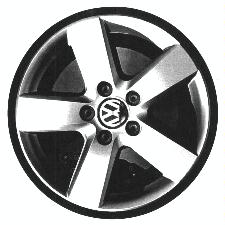
The Market Court issued three interim injunction decisions (358/16, 359/16 and 360/16) on 15 June. In all these decisions, Volks­wa­gen AG (Volkswagen) is the plaintiff.

According to Volkswagen, three Finnish companies were marketing and selling without permission rims that were identical or similar with registered designs belonging to Volkswagen. According to Volkswagen, two of the three companies were also marketing and selling without permission center caps (for rims) that were practically identical with a registered European Union trademark belonging to Volkswagen.

---

In an application against Rengas Turku Oy (Rengas Turku), Volkswagen requested the court to:

1. Prohibit the defendant from using, offering, marketing, selling, importing, exporting or storing the following rim designs:

- RE SCI­ROC­CO GI­NOST­RA W456
- RE SCI­ROC­CO GI­NOST­RA W456 BLACK
- RE W463 CROSS
- IMA­GE TO­RI­NO

According to Volkswagen, these rim designs are identical or similar with the registered community designs 000135199-0042, 000603857-0001 and the registered international design DM/077 557.

Volkswagen also requested the court to prohibit Rengas Turku from using, offering, marketing, selling, importing, exporting or storing center caps that were practically identical with the registered European Union trademark 000703983. Volkswagen specified that the infringing center caps are included in the rim designs RE W463 CROSS and IMA­GE TO­RI­NO.

Volkswagen also requested the court to impose a conditional fine of 200 000 euros to reinforce the orders.

2. Seize all the infringing rim designs.

3. Order that all accounting documents (invoices, sales documents and receipts) regarding the infringing rim designs are copied permanently by the bailiff and handed over to Volkswagen.

---

In an application against vannetukku.fi Oy (vannetukku.fi), Volkswagen pretty much repeated the requests mentioned above. This time the defendant was marketing and selling rim designs named as 'Fit for VW Re­per­bahn' and those designs were, according to Volkswagen, infringing the registered international design WO DM/079 881-1. In this case there were no requests regarding center caps.

In an application against OEMPLUS Oy (OEMPLUS), Volkswagen repeated again the requests mentioned in the first application with the exception that this time there was a more comprehensive list regarding rim designs marketed and sold by the defendant:

- 16992 volks­wa­gen-ria­ce-anth­ra­ci­te-po­lis­hed
- 17002 volks­wa­gen-gi­nost­ra-sil­ver
- 17009 volks­wa­gen-ros­tock-sil­ver
- 17025 volks­wa­gen-linz-sil­ver-po­lis­hed-lip
- 17026 volks­wa­gen-dha­ka-sil­ver-po­lis­hed and 17027 volks­wa­gen-dha­ka-sil­ver
- 17037 volks­wa­gen-cip­rus-anth­ra­ci­te-po­lis­hed and 17042 volks­wa­gen-cip­rus-glos­sy-black-lip-po­lis­hed
- 17041 volks­wa­gen-cip­rus-sil­ver-po­lis­hed
- 17043 volks­wa­gen-spar­ta-sil­ver-po­lis­hed
- 17048 volks­wa­gen-an­ka­ra-sil­ver
- 18371 volks­wa­gen-r-ni­si­da ja 18372 volks­wa­gen-r-ni­si­da-black
- 18502 volks­wa­gen-sa­ha­ra-matt-gun­me­tal, 18503 volks­wa­gen-sa­ha­ra-sil­ver-po­lis­hed-lip and 18504 volks­wa­gen-sa­ha­ra-sil­ver
- 18539 volks­wa­gen-cross-anth­ra­ci­te-po­lis­hed
- 18540 volks­wa­gen-cross-hy­per-sil­ver.

According to Volkswagen, those rim designs are identical or similar with the registered community designs 000135199-0001, 000135199-0007, 000135199-0025, 000135199-0036, 000135199-0042, 000603857-0001 000848361-0001 and the registered international designs DM/077 557 and DM/079 881.

Furthermore, OEMPLUS is marketing and selling center caps that are, according to Volkswagen, infringing the registered European Union trademark 000703983.

Volkswagen also requested the court to seize the infringing center caps.

Registered Community Design 000135199-0042.

The Market Court and the Volkswagen's requests no. 1-2

The Market Court stated that the requests no. 1-2 in the Volkswagen's applications are based on chapter 7 section 3 of the Code of Judicial Procedure (4/1734). According to that rule, there are three requirements that must be fulfilled before an interim injunction can be granted: claim requirement, danger requirement and comparison of interest / unreasonable inconvenience.

1) Claim requirement; the right holder needs to demonstrate that it is probable that he or she has a right that is enforceable against the opposing party.

The court referred to earlier Supreme Court rulings 1994:132, 1994:133, 1998:143, 2000:94 and 2003:118. In the rulings 1998:143, 2000:94 and 2003:118, the Supreme Court has stated that the threshold for granting an interim injunction is considerably higher in cases in which the interim injunction would lead to a situation where the applicant achieves in advance the same outcome, which is the subject of the claims in the main proceedings (etukäteisnautinta in Finnish).

In the application against Rengas Turku, Volkswagen claimed that Rengas Turku is marketing and selling, in its own online store, without permission rims that are identical or similar with the registered designs belonging to Volkswagen. Volkswagen also claimed that some of the rims have a center cap that is practically identical with the registered European Union trademark belonging to Volkswagen. Rengas Turku did not deny these claims, it only stated that it has removed the allegedly infringing rims and center caps from sale. The court ruled that, based on the evidence provided in the case and the fact that Rengas Turku has not denied the claims, Volkswagen has an enforceable right against Rengas Turku.

In the application against vannetukku.fi, Volkswagen claimed that vannetukku.fi is marketing and selling, in its own online store, without permission rims that are identical or similar with the registered international design DM/079 881-1 belonging to Volkswagen, applied on 19 December 2012. Vannetukku.fi denied the claims because the rim named 'Fit for VW Re­per­bahn' is based on a registered community design 002649970-0025 (applied 10 March 2015) belonging to Paalupaikka Oy, a subsidiary company of vannetukku.fi. According to vannetukku.fi, the presumption of validity rule is giving the company the right to sell and market the design rim as long as the said design right is valid. The rule is expressed in Article 85 of the Community Design Regulation No 6/2002. Furthermore, vannetukku.fi denied the claims because it considers that the design right belonging to Volkswagen is not new and it covers a spare part of a car and those kind of spare parts can not obtain any community design right.

The court had to assess whether it is probable that the sold and marketed rims are infringing the registered design right belonging to Volkswagen. The court stated that vannetukku.fi did not deny that the marketed and sold rims are identical or similar with the registered design right belonging to Volkswagen. According to the court, the fact that the subsidiary company of vannetukku.fi has the registered community design does not, per se, have a significance. When a community design is applied, there is a minimal official examination of an application, and no official searches, for example regarding novelty, are carried out as provided in Article 47 of the Regulation. Therefore, it is possible that an applied community design will be registered even though it is identical with an earlier registered community design. 

The court also stated that the presumption of validity provided in the Article 85 is not protecting the vannetukku.fi in this case. The presumption of validity is only protecting the allegedly infringed design. The court stated that in this case the presumption of validity actually protects the registered international design DM/079 881-1 belonging to Volkswagen, and that this design shall be treated as valid, despite the claims regarding a lack of novelty and the rim not being able to obtain any community design right. Even if this was not the case, vannetukku.fi has not provided any evidence that the registered international design DM/079 881-1 lacks novelty. Therefore, the court stated that Volkswagen has an enforceable right against vannetukku.fi.

In the application against OEMPLUS, Volkswagen claimed that OEMPLUS is marketing and selling, in its own online store, without permission rims that are identical or similar with the registered community designs 000135199-0001, 000135199-0007, 000135199-0025, 000135199-0036, 000135199-0042, 000603857-0001, 000848361-0001 and registered international designs DM/077 557 ja DM/079 881 belonging to Volkswagen. Volkswagen also claimed that some of the rims have a center cap that is practically identical with the registered European Union trademark belonging to Volkswagen. OEMPLUS did not deny these claims, it only stated that it has removed the allegedly infringing rims and center caps from sale. OEMPLUS also stated that this was an unintended infringement that was interfered with immediately when the company noticed it. The court ruled that, based on the evidence provided in the case and the fact that OEMPLUS has not denied the claims, Volkswagen has an enforceable right against Rengas Turku.

2) Danger requirement; there is a danger that the opposing party by deed, action or negligence or in some other manner hinders or undermines the realisation of the right of the applicant or decreases essentially its value or significance,

The court referred to earlier Supreme Court rulings 1994:132 and 1994:133 where the Supreme Court has ruled that the danger requirement is fulfilled if the danger is not very improbable based on the circumstances in the case.

The defendant Rengas Turku has marketed and sold allegedly infringing rims and some of the rims have allegedly infringing center caps. The company stated that it has removed the products from sale, but admitted that it still has some in its storage. Therefore, the court stated that the danger requirement is sufficiently fulfilled.

The defendant vannetukku.fi has marketed and sold allegedly infringing rims. Volkswagen provided evidence that it has purchased four allegedly infringing rims named 'Fit for VW Re­per­bahn' from the online store of vannetukku.fi on 16 February 2016. Therefore, the court stated that the danger requirement is sufficiently fulfilled.

The defendant OEMPLUS has marketed and sold allegedly infringing rims and some of the rims have allegedly infringing center caps. Volkswagen provided evidence that it has purchased four allegedly infringing rims named 'R" Ni­si­da 19' from the online store of OEMPLUS on 16 February 2016. OEMPLUS stated that it has removed the products from sale. The company also stated that it does not have any rims or center caps anymore in its storage. Nevertheless, the court stated that the danger requirement is sufficiently fulfilled.

3) Comparison of interest / unreasonable inconvenience; the opposing party does not suffer undue inconvenience in comparison with the benefit to be secured.

Volkswagen stated that the interim injunction can not cause any unreasonable financial inconvenience to Rengas Turku because the allegedly infringing rims are only a small part of all the rims provided by Rengas Turku in its online store. According to Volkswagen, dismissal of the application (for an interim injunction) would cause sales decrease and possible detriment to its brand. According to Rengas Turku, the interim injunction is not necessary because it has removed the products from sale. The court ruled that, based on the evidence provided in the case and the rule that the applicant who has unnecessarily resorted to a precautionary measure is liable to compensate the opposing party for the damage caused by the precautionary measure and its enforcement, and to cover the expenses incurred, Rengas Turku does not suffer undue inconvenience. The liability to compensate the damage and cover the expenses is expressed in chapter 7 section 3 of the Code of Judicial Procedure.

In the application against van­ne­tuk­ku.fi, Volkswagen expressed the same arguments mentioned above regarding the comparison of interest / unreasonable inconvenience. Vannetukku.fi argued that it has a very big storage that consists mainly of tires. According to the company, it has only two allegedly infringing rims left in its storage. The court ruled the same way as mentioned above regarding the application against Rengas Turku.

In the application against OEMPLUS, Volkswagen expressed the same arguments mentioned above regarding the comparison of interest / unreasonable inconvenience. Vannetukku.fi only stated that it has more than 16 000 products for sale in its online store. The court ruled the same way as mentioned above regarding the applications against Rengas Turku and vannetukku.fi.

---

In all the cases, the court stated that it is possible to order an interim injunction regarding the request no. 1. The court also stated that the request no. 2 (seizure) is not necessary because the court will impose a conditional fine to reinforce the orders regarding the request no. 1. Therefore, the request no. 2 was dismissed. The conditional fine is 30 000 euros regarding Rengas Turku and OEMPLUS and 50 000 euros regarding vannetukku.fi.

The Market Court and the Volkswagen's request no. 3

The Volkswagen's request no. 3 (copying and handing over the accounting documents) is based on sections 2 and 3 of the Act on Securing Evidence in Civil Matters concerning Industrial Rights and Copyrights (344/2000). According to the section 2, the court can give a seizure order concerning any material that can have a significance in the case in question. The opposing party shall not suffer undue inconvenience in comparison with the benefit to be secured (comparison of interest / unreasonable inconvenience). According to the section 3, the right holder needs to demonstrate that it is probable that he or she has a right that is enforceable against the opposing party, and the right is being infringed or that such infringement is imminent (claim requirement). Furthermore, there is a danger that the opposing party, or the one who has the material, conceals, destroys or hands over the evidence or in some other manner endangers the preservation of the evidence (danger requirement).

All in all, the requirements for the interim injunction are pretty much the same as the requirements regarding the chapter 7 section 3 of the Code of Judicial Procedure.

In all the applications, Volkswagen has argued that the preservation of the accounting documents is important in order to launch an infringement proceedings and determine the claim for compensation.

The court assessed first the claim requirement. The court stated that the claim requirement is fulfilled also regarding the request no. 3 and the accounting documents mentioned in the request have, per se, a significance in the cases in question.

The court then assessed the danger requirement. According to Volkswagen, there is a substantial danger that the evidence is not going to be preserved, in its entirety, without a seizure. There is a considerable risk that the defendants could, for example, destroy some relevant receipts or sales orders.

The court stated that chapter 2 sections 9 and 10 of the Accounting Act (1336/1997) are providing information on how and how long to preserve accounting documents. Furthermore, chapter 30 section 9 of the Criminal Code of Finland (39/1889) provides that if a person with a legal duty to keep accounts, his or her representative, a person exercising actual decision-making authority in a corporation with a legal duty to keep books, or the person entrusted with the keeping of accounts, destroys, conceals or damages accounting documentation and in this way impedes the obtaining of a true and sufficient picture of the financial result of the business of the said person or of his or her financial standing, he or she shall be sentenced for an accounting offence to a fine or to imprisonment for at most two years.

Therefore, according to the court, it is very improbable that the defendants would destroy any of the evidence mentioned in the request no. 3. The danger requirement is not fulfilled and there was no need to assess the comparison of interest / unreasonable inconvenience.

The request no. 3 was dismissed.

---

Enforcement and security

According to chapter 7 section 3 paragraph 3 of the Code of Judicial Procedure, a prerequisite for the entry into force of the interim injunction is that the applicant applies for enforcement of a precautionary measure as provided in chapter 8 of the Enforcement Code (705/2007).  According to chapter 8 section 2 paragraph 1 of the Enforcement Code, enforcement of a precautionary measure requires that the applicant lodges with the bailiff security for loss that the respondent may incur as a result of the precautionary measure. According to chapter 8 section 3 of the Enforcement Code, the defendant can lodge a security in order to prevent the enforcement. 

The main proceedings

According to chapter 7 section 6 paragraph 1 of the Code of Judicial Procedure, when the interim injunction application has been granted, the applicant shall within one month of issue of the order bring an action on the main issue before a court or bring the main issue up for consideration in other proceedings that may result in a decision enforceable in accordance with chapter 2 section 2 of the Enforcement Code. If the consideration of the issue is not initiated within said period, or if the case is discontinued, the preliminary injunction shall be reversed, as provided in chapter 8 section 4 of the Enforcement Code.